

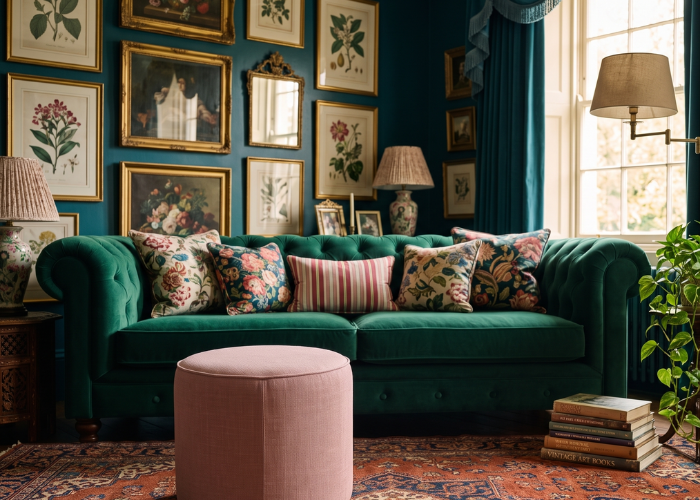
After decades of pared-back neutrals, maximalism is finally back. Homes are moving away from the safety of white walls and matching neutrals, and towards spaces that feel layered, personal, and full of colour. It's a shift that encourages you to keep the things you love and to mix patterns without apologising for it.
There’s a difference between a maximalist room that feels rich and confident, and one that just feels busy. There are many tips to take into consideration to get it right, such as an anchor piece, working with colour deliberately rather than randomly, and curating rather than accumulating.
This guide covers what maximalist interior design means and how to plan a scheme that feels curated rather than chaotic. We’ve even provided some of our favourite style ideas to inspire your own maximalist interior design.
What Is Maximalist Interior Design?
Maximalist interior design is a "more is more" philosophy built on bold colour, layered pattern, mixed textures and personal collections, brought together with intention rather than thrown together at random. It sits at the opposite end of the spectrum from minimalism, but it isn't a byword for clutter.
The best maximalist rooms are as carefully composed as any minimalist one, just with a far richer set of ingredients. Every object, from a statement sofa to a gallery wall of family photos, is meant to earn its place and add to the story of the room.
The style has deep roots. Echoes of it run through the Baroque period, the ornate parlours of the Victorian era, and the glamour of Art Deco and Hollywood Regency interiors. All periods that favoured abundance and embellishment over restraint.
What's changed in its modern revival is accessibility. Today's maximalism is less about displaying wealth and more about displaying personality, and it's just as achievable with a well-chosen fabric and a flea-market find as it is with anything bespoke.
Maximalism vs Minimalism vs Eclectic
Minimalism strips a room back to its essentials, while maximalism deliberately layers it up. Eclectic design, meanwhile, is often confused with maximalism but isn't quite the same thing. Eclectic is about mixing styles and eras together, while maximalism is specifically about abundance, scale and visual density, whether that's achieved through one consistent style or many. A room can be maximalist without being eclectic, and vice versa.
How to Plan a Maximalist Room Without It Becoming Cluttered
Three principles separate a maximalist room that feels rich and intentional from one that just feels busy.
Start with one anchor piece
Rather than trying to style an entire room in one go, choose a single item you love. This could be a sofa in a striking fabric, a bold wallpaper or a piece of art. Whichever you choose, let it dictate everything else. Pull your colour palette from that piece's strongest tones rather than its subtleties, then build outward.
Use a proportion rule for colour
A simple way to stop a bold palette tipping into visual overload is to work with roughly three colours in a dominant/secondary/accent split. The majority of the room in one main tone, a good supporting amount in a second colour, and a smaller, punchier dose of a third accent colour.
It's a similar logic to the classic 60/30/10 colour guideline used by decorators, and it's especially useful once you're mixing pattern as well as colour, since it stops the eye having nowhere to rest.
Curate, don't accumulate
Group collections with intention rather than scattering them, leave some negative space so statement pieces can breathe, and repeat a colour, finish or material (brass, a favourite blue, mid-century silhouettes) throughout the room so an eclectic mix still reads as one considered scheme.
As a helpful gut check, if you're hesitating over whether a colour or pattern is "too much," it's usually a sign to commit further rather than water it down. Half-hearted maximalism tends to look more like clutter than the real thing.
Maximalist Living Room Ideas
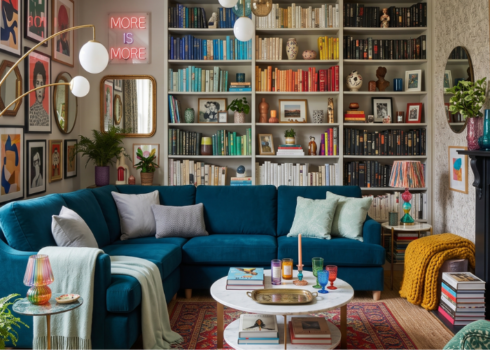
The living room is where most people start, because it's usually built around one large, high-impact piece: the sofa. A corner sofa or a generously scaled chaise sofa gives you the most visual real estate to work with and comfortably anchors a bold scheme, while a shapelier design with soft, curved lines can help soften an otherwise punchy colour palette.
From there, layer in contrasting textures, such as velvet cushions against a linen or weave sofa base, a jute or patterned rug underfoot, knitted throws for warmth. Don't neglect lighting, a sculptural or oversized lamp does as much work as a piece of art in a maximalist living room, and clustering a few smaller lights tends to feel more intentional than relying on one central fitting.
Bookshelves, console tables and mantelpieces are also prime maximalist real estate. Curated in cohesive groupings (by colour, height or theme) rather than scattered piece by piece, they turn everyday storage into part of the room's personality.
Maximalist Bedroom Ideas
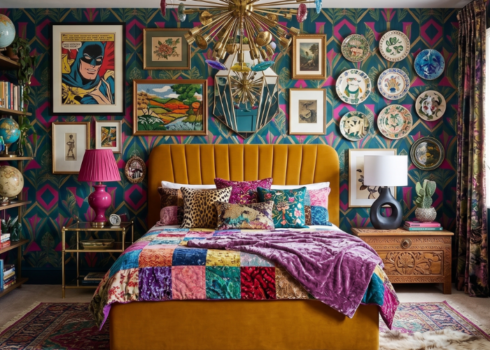
A maximalist bedroom follows the same anchor-piece logic as the living room, except the anchor is almost always the bed itself. A statement headboard, in a jewel-toned velvet, a striking pattern, or simply a bold contrast to the wall colour behind it, gives the whole room a natural focal point and a foundation to layer from.
Once that's set, richly textured bedding, a fringed or quilted throw, and a couple of patterned cushions add depth without much risk, since they're the easiest and cheapest elements to swap out later. Wallpaper is particularly effective in bedrooms because you spend long, close-up periods of time in the room, so a print you love is worth the commitment. Pairing a bold paper with a calmer, more tonal upholstery choice on the bed keeps the room feeling restful rather than overstimulating.
Mirrors and glass or metallic accents are worth building in too, especially in smaller bedrooms, since they bounce light back into the room and keep a dense scheme from feeling heavy.
Maximalist Interior Design for Small Spaces
Small rooms are often assumed to need a lighter touch, but many designers argue the opposite. Actually, compact spaces are some of the easiest places to go maximalist, precisely because there's less square footage for a scheme to feel diluted across.
A single colour drenched across walls, ceiling and woodwork can make a small room feel more enveloping rather than more cramped, and transitional spaces like hallways, landings and downstairs loos are ideal for a bolder wallpaper choice than you might risk in a room you sit in all day.
The advice to "scale down" furniture in a small room is largely a myth here. A generously sized sofa or a proper, deep armchair tends to read as more considered than several smaller, tentative pieces. If pattern feels risky at scale, smaller-scale prints and a tightly limited colour palette (two or three tones, repeated) give you the abundance of maximalism without overwhelming a modestly sized room.
12 Maximalist Interior Design Ideas to Try at Home
1. Colour drench your anchor room
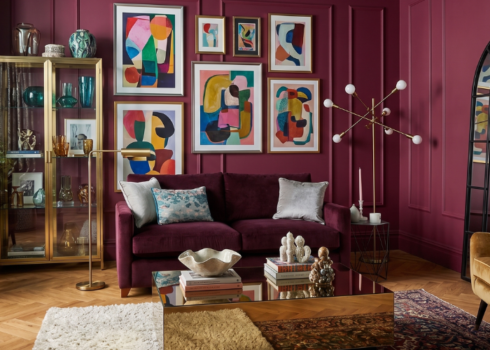
Painting the walls, ceiling, skirting boards and door frames in a single saturated shade removes the visual "stop points" a room normally has, making the whole space feel like one confident, cohesive statement rather than four walls competing with each other. It's one of the simplest ways to get a dramatic maximalist result without touching a single piece of furniture, and it pairs particularly well with a sofa in a complementary or tonal hue, so the seating feels part of the room rather than dropped into it. Berry, burgundy and deep red tones work especially well for this in living and dining rooms, giving a cocooning, jewel-box feel that's ideal for evening use.
2. Choose one statement sofa or chair as your hero piece
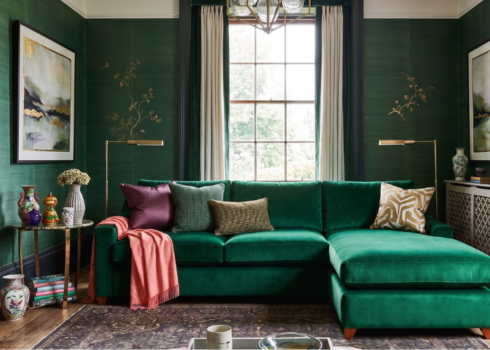
Rather than trying to layer colour and pattern evenly across a room, pick a single seating piece in a rich jewel tone, such as emerald, sapphire, mustard or burgundy, and let it set the entire palette for the space.
This is the "anchor piece" principle in its most practical form. Once the sofa's colour is locked in, every other decision (cushions, art, accessories) becomes a case of pulling shades from that one piece, which makes the whole scheme far easier to build with confidence. Velvet is worth prioritising here, since it carries saturated colour more richly than flatter weaves and adds a tactile, luxurious quality that suits the maximalist mood.
3. Try a duck-egg or dusty blue drench for a calmer take
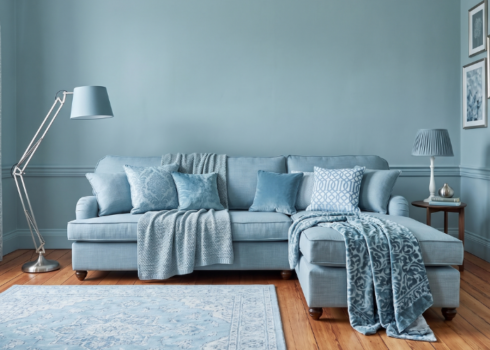
Maximalism doesn't have to mean intense saturation. A softer blue, drenched across a room in the same way as a bolder colour, still delivers the enveloping, considered feel of the style while staying calming enough for a bedroom or a room you unwind in daily. It's a good entry point for anyone nervous about committing to a very bold hue, since duck-egg and dusty blues sit comfortably alongside both warm woods and cooler metals like brushed nickel.
4. Go deep pink or berry for a softer maximalist statement
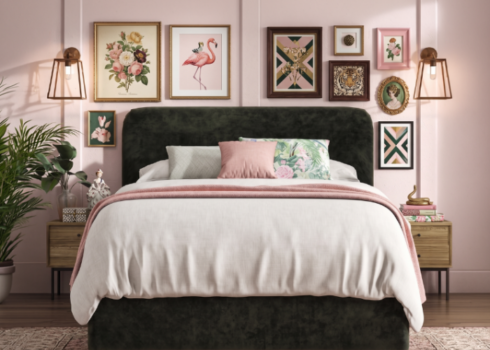
Pink, in a deep, dusty or berry-adjacent tone rather than anything pastel, reads as confidently maximalist rather than twee. It works particularly well as a colour-drenched scheme in bedrooms and snugs, and pairs beautifully with warm wood tones, brass accents and a sofa or armchair upholstered in a complementary rather than matching shade.
5. Use dark or black walls to make furniture and colour pop
A dark, dramatic backdrop is one of the most effective (and often overlooked) maximalist tools, because it makes everything placed against it, like colour, texture and metallics, read with far more intensity than it would against a neutral wall. It's particularly effective with a leather or richly textured sofa, and works well in rooms used mainly in the evening, where the drama of the colour is enhanced by lamplight rather than daylight.
6. Layer pattern and texture onto an accent armchair
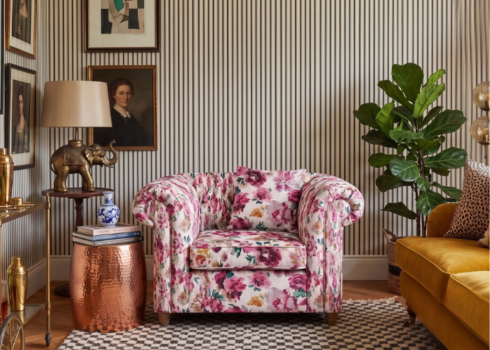
An accent chair is one of the lowest-risk ways to introduce a bold print or a heavily textured fabric into a room, since it's a single, containable piece rather than a whole-room commitment. Look for a print with a different scale to anything else nearby. Whether that’s a large floral against smaller-scale stripes or checks elsewhere in the room, so the eye has variety to travel across without the patterns fighting each other.
7. Build a curated vignette on a side table or console
A cluttered surface and a curated one look completely different, even with a similar number of objects on them. The difference is grouping with intention. Cluster a lamp, a stack of books, and one or two meaningful objects (a piece of art, a travel find, a family memento) together rather than spacing everything out evenly, and vary the heights within the grouping so it reads as a considered vignette rather than a random collection of things put down in passing.
8. Add a richly coloured or patterned footstool
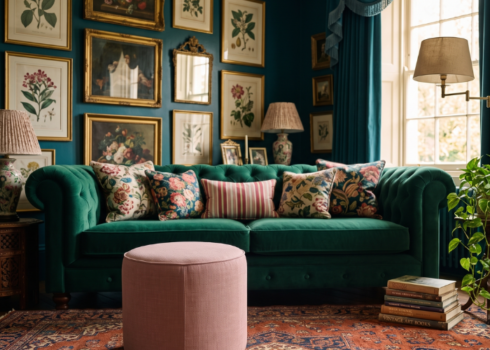
A footstool is one of the most affordable ways to bring bold colour or pattern into a room at floor level, without the commitment of a full sofa reupholster. It's also a practical piece, doubling as extra seating or a spot for a tray, which matters in a maximalist room, since even the boldest schemes need to stay liveable.
9. Mix metals and materials
Maximalism thrives on contrast between materials as much as contrast between colours. Pairing a cool material like glass or marble against something warmer like brass, walnut or velvet creates the layered, tactile richness the style is known for. A brass-legged side table next to a velvet sofa, or a glass lamp base against a richly patterned wallpaper, does a lot of work with very little extra colour.
10. Go olive or forest green for a moody, layered living room
Deep green is one of the most reliably popular maximalist colourways because it works as both a wall colour and an upholstery colour without ever feeling cold, and it sits comfortably alongside warm woods, brass, and jewel-toned accents like burgundy or mustard. A green-drenched room with a similarly toned sofa creates a particularly cohesive, cocooning look that photographs (and lives) beautifully in both daylight and lamplight.
11. Bring maximalism into the bedroom with a statement headboard
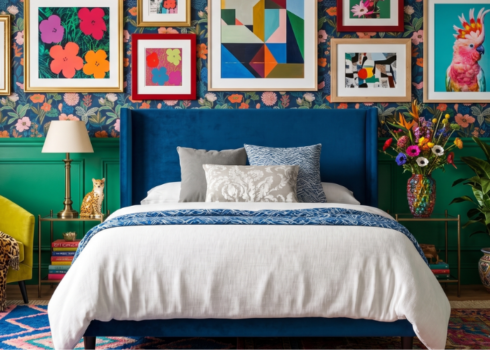
The headboard does the same job in a bedroom that the sofa does in a living room. It's the largest single piece of upholstery in the room and the natural place to commit to a bold fabric or colour. A jewel-toned velvet or a striking pattern here gives the whole room its anchor, and because a headboard sits against a wall rather than in the middle of a room, it's a relatively contained way to make a big style statement.
12. Layer rugs, cushions and throws as the finishing touch
Soft furnishings are the lowest-commitment way to test maximalism before going bigger, and they're also what pulls a room together once the larger pieces (sofa, walls, headboard) are in place. Mixing textures, such as a woven rug under a smoother sofa fabric, a chunky knit throw against smaller printed cushions, adds the layered depth that makes a maximalist room feel finished rather than sparse. Because these pieces are easy to swap, they're a good place to experiment with a bolder colour or pattern than you'd commit to elsewhere.
Frequently Asked Questions
Is maximalism the same as eclectic design? Not quite. Eclectic design is specifically about blending different eras and styles together, while maximalism is about abundance, scale and visual richness, which can be achieved within a single style or across many.
Can a maximalist room use a neutral colour palette? Yes, texture, pattern scale, and layering can create a maximalist feel even in a muted or monochrome scheme; colour isn't the only lever available.
What are the most common mistakes in maximalism? Overcrowding a room without any breathing space, mixing styles with no unifying colour or material thread, and letting the look override everyday practicality.
How do I stop a maximalist room looking cluttered rather than curated? Group objects intentionally rather than scattering them, repeat a colour or finish throughout the room, and leave some negative space around your boldest pieces so they still stand out.